
A reflection on entitlement, spiritual squatters, and the illusion of ownership
Imagine this:
You’re driving along a long highway. Suddenly, your car breaks down. With no one around and the sun setting, you walk until you stumble upon a quaint, beautiful home at the edge of the forest. You knock. A kind soul opens the door and welcomes you in. You’re offered a meal, a hot shower, clean clothes, and a bed to rest in. You breathe a sigh of relief.
You didn’t earn this kindness. It wasn’t yours to begin with. But it was given.
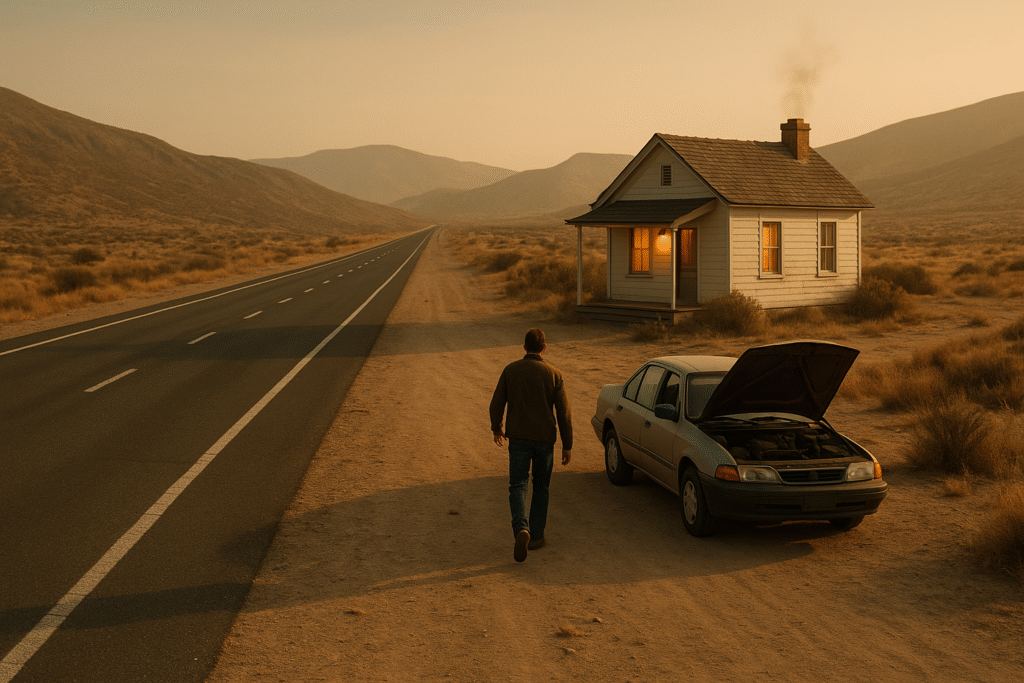
A day passes. Then another. You start to get comfortable. You like it here.
By the end of the week, you’re offering “suggestions”:
— We should paint this wall.
— Let’s renovate the kitchen.
— Actually, I’m thinking of adding a second floor.
— I’d like to bring my friends to live here too.
Eventually, your host reminds you gently:
“This is not your house.”
Absurd, right?
But this is exactly how many of us behave with Allah ﷻ.
The Builders Who Forgot the Owner
We arrive in this world without asking. We are hosted here by Divine Mercy, clothed in skin we did not weave, walking on earth we did not build, nourished by food we did not grow.
And still—still—we act like we own the place.
We make demands.
We question God.
We say, “I never asked to be born,” and yet behave as if we deserve the world and more.
We redecorate.
We construct.
We dominate.
Take the world of construction, for example.
We carve out roads, erect towers, and drain wetlands. In doing so, we flatten hills shaped by Divine hands, disrupt ecosystems, displace animals, cut trees, and bury rivers under concrete.
We call it progress.
But water always remembers where it flows.
In one real-life case, developers ignored the natural terrain and spiritual reality of a piece of land. They focused on profit—until the water rose up and reclaimed what was its right. Foundations cracked. Basements flooded. Nature spoke.
We forget that this world is already occupied—not just by animals and insects, but by beings of the unseen: the jinn.
They have lived in corners of the Earth where humans never dared venture. But our greed has no boundaries—we fill oceans to create islands, trespass sacred lands, and pave highways through wild, inhabited spaces. Then we wonder why those places become sites of unrest, accidents, or strange misfortune.
We see this world as ours to conquer—but we were meant to be stewards, not colonizers.
The Deception of Decorating
And while we’re busy redecorating the outside world, something more sinister is happening inside.
As Ustadh Nouman Ali Khan once put it:
“Shayṭān doesn’t just want you to redecorate your house—he wants to redecorate your heart.”
But his decorations don’t look like evil.
They look like success.
Like luxury.
Like that dream mansion, or perfect body, or ideal spouse.
Shayṭān doesn’t show up with horns and a contract—he shows up with beauty, status, and distraction.
He shows you what you want, until you start worshiping it.
Until your heart becomes so filled with material attachments…
that there’s no more room for the Divine.
We often say, “Home is where the heart is.”
But the truth is:
Your heart is your spiritual home.
And a heart filled with idols—material or emotional—cannot receive the Guest of Majesty.
Allah ﷻ does not visit a heart that has been defiled by greed, ego, entitlement, or shirk.
Tawḥīd is not just about saying Lā ilāha illa Allah—
It’s about purifying the heart from all claimants to the throne besides Him.
Testing Grounds, Not Paradise
We’re not here to build paradise.
This Earth is not Jannah.
It’s not a resting place—it’s a testing ground.
Some treat life like a vacation: wait it out, coast until death, then expect entrance into paradise.
But this world is not a lounge.
It’s more like a battlefield. Or a construction site for the soul.
Our goal here isn’t to win in dunya—it’s to be worthy of the afterlife.
And you might ask: Why? Why strive to be “worthy” of the afterlife?
At its simplest:
Do you want to go to Paradise?
A place where pain vanishes, where pleasure is eternal, where your heart is free from grief and your soul from exhaustion. A place of reunion, rest, and radiant joy.
But if you’re someone who seeks more—someone wired for excellence, an overachiever of the soul—you begin to realize something deeper:
Even in Paradise, there are levels. And at the very top of this spiritual hierarchy is the Messenger of Allah ﷺ. Then the Prophets. The companions. The saints. And then… those unknown souls who reached a divine rank through sincerity, service, and secret striving.
Some people in Paradise will never get to see Allah ﷻ.
Others will have that honor only occasionally.
And then… there are those who will gaze upon Him morning and evening, basking in the beauty of Divine Presence.
“When the people of Paradise enter Paradise… a caller will call: ‘O people of Paradise! You have a promise with Allah…’ Then the veil will be lifted, and they will look at Him… and they will not be given anything more beloved to them than looking at Him.”
— Ṣaḥīḥ Muslim 181
“Indeed, you will see your Lord just as you see this moon, and you will have no difficulty in seeing Him.”
— Ṣaḥīḥ al-Bukhārī 7436, Ṣaḥīḥ Muslim 633
✨ Some scholars interpret Surah al-Qiyāmah (75:22–23):
وُجُوهٌ يَوْمَئِذٍ نَّاضِرَةٌ إِلَىٰ رَبِّهَا نَاظِرَةٌ
“Faces that Day will be radiant, looking toward their Lord.”
✨ Others describe spiritual gatherings in Paradise where Prophets recite, Dāwūd (ʿalayhi al-salām) sings with unmatched beauty, and the Messenger ﷺ leads blessed assemblies.
That’s what the people of iḥsān are aiming for—not just Jannah, but nearness.
Not just reward, but recognition.
Not just to be in the Garden, but to sit in the company of the Beloved, knowing Allah ﷻ on a first-name basis.
Because to love Allah is to want to be close to Him.
And closeness… is earned through excellence.
This is the spirit of Observance.
To live with iḥsān in this life—so we may be counted among the elite in the next.
If you’re someone who says things like,
“Oh, if I just get a little spot by the entrance of Paradise, I’ll be happy…” — then beware.
That kind of thinking may sound humble, but it’s spiritually risky.
Because the truth is: one single bad deed could make the difference between Paradise and Hellfire.
So if you want to be strategic—if you want to manage your spiritual risk wisely—
aim for the highest ranks.
Aim for the moon.
If you’re sincere, even if you fall short, you may still land… right at the gates of Paradise.
Life as a Dream, the Soul as Reality
There’s a phrase you may have heard: “Life is but a dream.”
And maybe you dismissed it as poetic. But what if it’s truer than we think?
Imagine existence not as one linear timeline—but as a continuum of the spirit.
You were a soul before your body was formed.
And after the death of this body, you’ll continue your existence as a soul again—eternally.
This brief human life—this dunyā—is the real interruption.
A short intermezzo between two long stretches of spirit.
A blink of an eye compared to the timelessness of the soul.
So what is this world, really?
It’s like… a dream.
When we sleep, our bodies rest, but our spirits are released. We dream. And when we wake up, we say, “That wasn’t real.”
Now flip that:
This life is the dream.
Death will be your awakening.
Back to your true state.
Back to your real self.
اللَّهُ يَتَوَفَّى الْأَنفُسَ حِينَ مَوْتِهَا وَالَّتِي لَمْ تَمُتْ فِي مَنَامِهَا
“It is Allah who takes the souls at the time of death and those that do not die [He takes] during their sleep…”
<span title=”Qur’an 39:42 — Surah al-Zumar.”>[39:42]</span>
People love sleep because it feels like relief—because your spirit has returned closer to its home away from the constraints of the body. Waking up can feel heavy, because you’re returning to a world of density and illusion.
What could be one of the reasons why Allah loves us so much?
Here is our theory: because we are the only spiritual creation placed in bodies—sent into the “hard dream” — and some of us still choose to love Him anyway. And Allah Knows Best.
This is why hardship has value. Why patience has rank. Why love under trial counts double in the Hereafter.
Closing Reflection
“You do not get to decorate the world as you wish.
But you do get to shape your soul.”
— Observance
Duʿā: For Nearness and Awakening
O Allah, do not take us from this world except while our hearts are attached to You, our breaths are busy with Your remembrance, and our souls long to meet You.
اللَّهُمَّ لا تَقْبِضْنَا إِلَّا وَقُلُوبُنَا مُتَعَلِّقَةٌ بِكَ، وَأَنْفَاسُنَا مَشْغُولَةٌ بِذِكْرِكَ، وَأَرْوَاحُنَا مُشْتَاقَةٌ لِلِقَائِكَ.
Allāhumma lā taqbiḍnā illā wa qulūbunā mutaʿalliqa bika, wa anfāsunā mashghūlatun bidhikrik, wa arwāḥunā mushtāqatun li-liqā’ik.
Leave a Comment